I never thought of myself as someone who gets obsessed with high scores. Then Police Chase Drifter happened, and now I'm that person refreshing the leaderboard way too often.
How I Stumbled Into This Addiction
It started randomly one afternoon. I was bored, scrolling through browser games, and Police Chase Drifter's thumbnail caught my eye. "Another cop chase game," I thought. Big mistake assuming it would be forgettable. Turns out, I was wrong in the best way possible.
The first thing that hit me: no installation, no waiting around. I clicked, and boom, I'm already in the driver's seat with sirens blaring behind me. The game doesn't waste your time with tutorials or cutscenes. It throws you straight into the action.
What Makes Drifting Special
Here’s the thing about drifting in Police Chase Drifter that no one ever tells you upfront: it’s not about being flashy, it’s about survival. Let me explain what really happens when you drift:
- Your car skids into the turn instead of following the normal path
- You can take corners at speed
- You might not run as smoothly on your trajectory as the cops behind you
- You get points for just doing the manoeuvre itself
- You can string several drifts together to multiply your score.
After the third session I realised that drifting is not a bonus feature. It's the entire language of the game. Master it, and you'll survive longer. Ignore it, and you'll be eating pavement within minutes.
The Unspoken Rules Nobody Tells You
Through trial and error (lots of error), I picked up on patterns that actually matter:
- Cops don't all behave the same way depending on the area
- Timing your drift slightly before you hit the corner beats drifting right at the corner
- Some streets funnel you into dead ends if you're not careful
- Traffic acts as both obstacle and camouflage
- Your speed affects how responsive the controls feel
The learning curve isn't steep, but it's definitely present. I felt like a completely different driver after my first 20 minutes compared to the first five minutes.
Breaking Down Your Score
| What Gets You Points | How Much | Why It Matters |
|---|
| Staying alive per second | 1 point | Base survival reward |
| Basic drift | 10 points | Standard technique |
| Chained drifts | 25+ points | Skill combo reward |
| Dodging obstacles | 5 points | Awareness bonus |
| Shaking off cops | 15 points | Major evasion bonus |
| Distance traveled | Variable | Encourages longer runs |
The scoring system pushes you to play actively, not passively. You can't just survive by hiding. You've got to be aggressive with your drifting if you want respectable points.
The Mental Game Nobody Discusses
What surprised me most wasn't the mechanics. It was the psychological aspect of constant pressure.
Those sirens in the background never stop. The cops keep coming. There's always something chasing you, and that creates this strange tension that keeps you focused. You can't zone out. You can't go on autopilot. Every decision matters because one bad move ends your run.
Why That's Actually Amazing
The pressure is what separates this from mindless casual games. You feel like you're genuinely escaping something, not just clicking buttons. Your hands get a little sweaty when you're doing well and the cops are closing in. That's real engagement.
The Frustration Factor
Of course, the same thing that makes it engaging also makes it rage-inducing sometimes. You'll hit one wrong turn and suddenly it's over. Your best run ever gets cut short by a rogue taxi you didn't see coming. That's the flip side of instant consequences.
What I Learned About My Own Gaming Habits
Playing Police Chase Drifter taught me something unexpected about myself:
- I'm way more motivated by incremental improvement than I thought
- I can stay focused on a single task for longer than expected
- Immediate feedback (crash or survive) is more satisfying than gradual progression
- I actually enjoy playing the same game repeatedly if the challenge feels fresh each time
- Simple doesn't mean shallow
Most of the "games" I used to play offered flashy graphics and complex systems, but they didn't engage me the way this stripped-down driving escape does. Turns out I was looking for the wrong things.
A Typical Gaming Session for Me
Here's how my runs usually go these days:
- First two minutes: Finding rhythm, testing the roads, light dodging
- Minutes 3-5: Getting confident, attempting longer drift chains, building score
- Minutes 6-8: Heat's on, cops are aggressive, survival mode kicks in
- Minute 9+: Pure focus, adrenaline up, hands shaking slightly
- The crash: Usually something stupid, and then immediately launching another run
Most of my sessions last about 30 minutes total with multiple runs. I go in intending to play for five minutes and walk away an hour later.
Common Questions People Actually Ask Me
Does the game get repetitive after you've played it a bunch?
Honestly, not yet for me. Each run is different because the cops behave differently and you make different route choices. The fundamentals stay the same, but the execution keeps shifting.
How long does it take before you feel like you're actually good at this?
First run teaches you the basics. First 10 runs teach you survival. First 50 runs teach you actual skill. I'm somewhere in the middle and still discovering new techniques.
Is there an endgame, or do you just keep playing forever?
There's no real endgame. Your goal is always the same: stay alive, build your score, beat your previous best. The satisfaction comes from personal improvement, not completing objectives.
Can beginners actually have fun, or is the difficulty curve punishing?
Beginners have fun because every run, even failed ones, feels productive. You learn something. The difficulty curve is gentle at first and gets steeper, which is actually perfect game design.
Why haven't I heard of this game if it's so good?
It doesn't have a massive marketing budget or YouTube personalities covering it. It's the kind of gem that spreads through word of mouth from people who actually play it.
The Technical Side of Things
One thing I genuinely appreciate: the game actually runs smoothly. No lag spikes, no weird hitbox issues, no frustrating bugs that make you lose unfairly. When you crash in Police Chase Drifter, it's always because you messed up, not because the game betrayed you. That's rarer than you'd think.
The controls are responsive. The feedback is immediate. Nothing feels disconnected or delayed. It's the kind of polish you don't notice until you compare it to other browser games that do things wrong.
The Unexpected Benefits
Beyond just having fun, playing this game has actually made me:
- More patient with my own learning process
- Better at staying calm under pressure
- More aware of my surroundings (strange how game practice translates)
- Less interested in bloated games that waste my time
- More appreciative of simple, well-executed ideas
I know that sounds dramatic for a browser game, but the mental engagement is real.
My Honest Take
Police Chase Drifter isn't going to change gaming forever. It won't make headlines or win awards. But if you're looking for something that actually holds your attention, something that makes you want to improve at a specific skill, something you can jump into anytime without commitment, this is exactly what you need.
The beauty of this game is in its restraint. It knows what it is. It does one thing incredibly well and doesn't apologize for not doing ten things mediocrely.
What's Next for Your Gaming
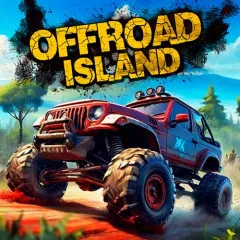
If you've already spent time with Police Chase Drifter and you're looking for something that scratches a similar itch, check out Offroad Island. It takes the same philosophy of simplicity and skill-based gameplay but throws you into completely different terrain. Same addictive quality, different context